
Activated sludge mixing
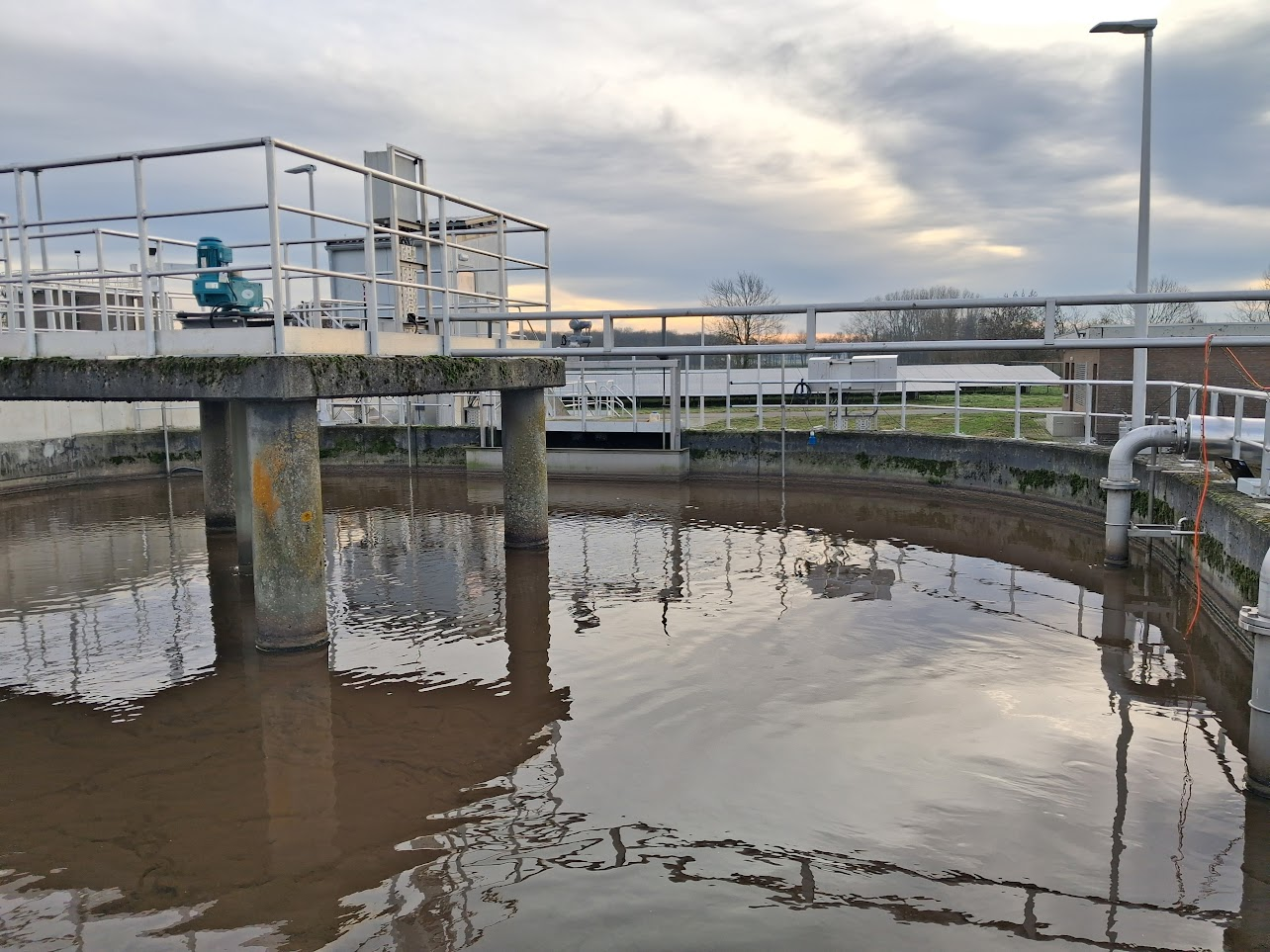
The Aquafin wastewater treatment plant in question (Belgium) is equipped with a state-of-the-art mixers. However, operators raised concerns with respect to the homogeneous distribution of activated sludge in the basin, especially during the denitrification phase of the activated sludge process. The activated sludge concentration profile is measured during the denitrification phase with the Olpas Tentacle TSS/MLSS sensor.
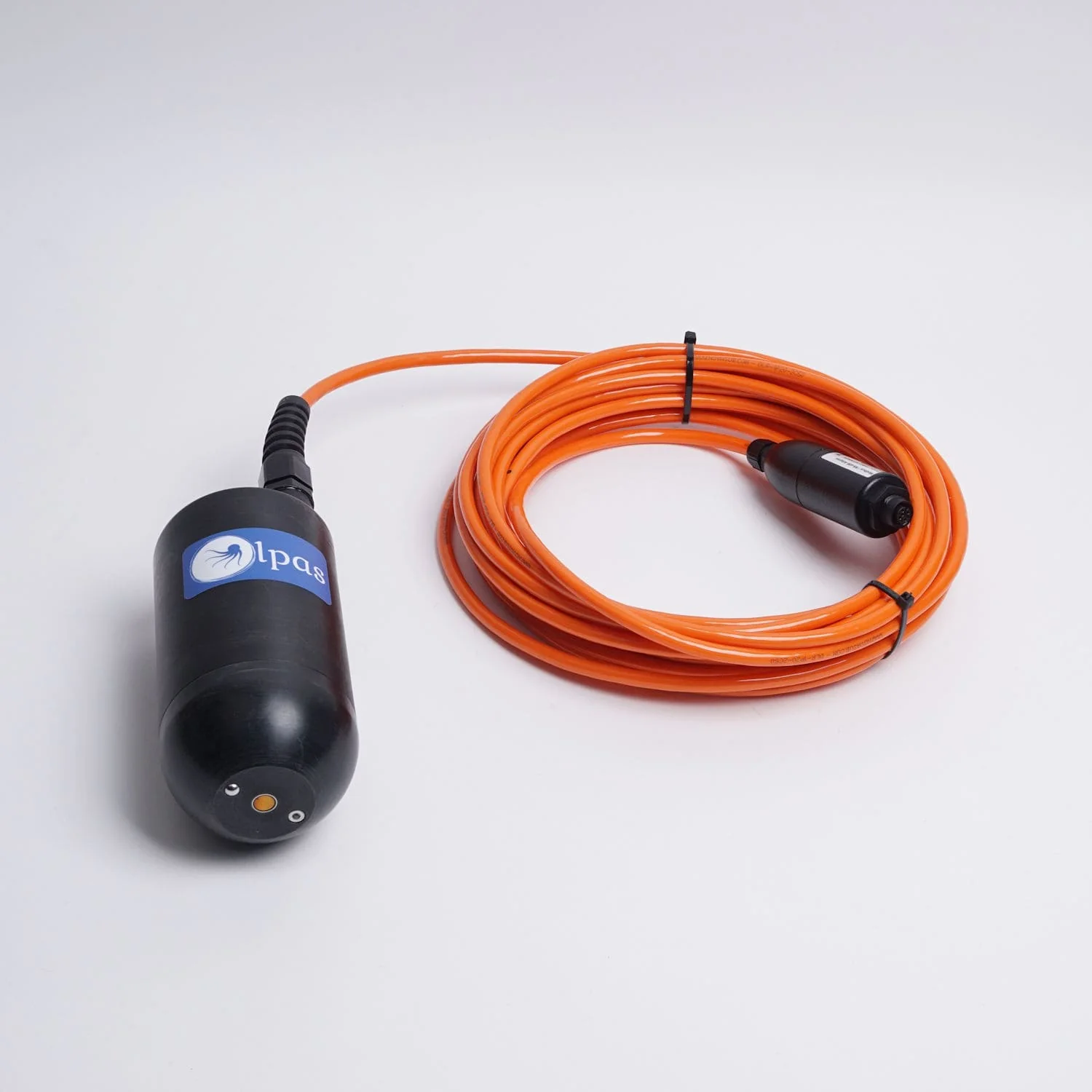
Olpas Tentacle MLSS concentration sensor
The Olpas Tentacle concentration sensor can be used for measurement of activated sludge concentrations in municipal wastewater treatment plants. The sensor is suspended by a stainless steel chain and lowered every 5-10min in order to measure the concentration profile in function of time and depth of the pond. After 60minutes of measuring, the full depth of the pond is scanned.
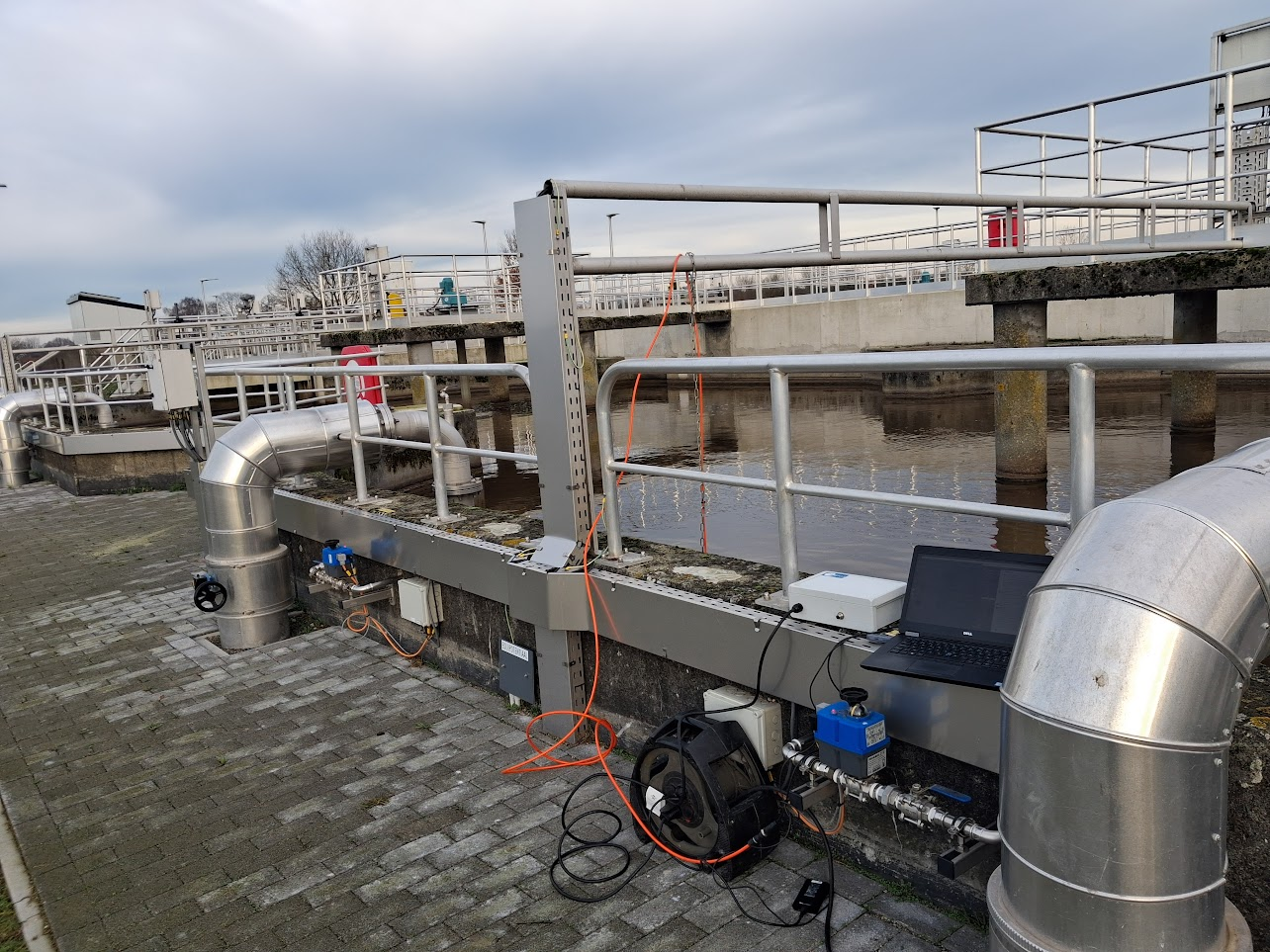
For this kind of field measurements, the sensor can be powered and data can be logged by connecting the Tentacle with a laptop using the USB configuration cable. This allows datalogging of the measured values of the sensor - MLSS concentration and temperature - every second. The sensor is stepwise lowered in the pond by extending the stainless steel chain.
Field measurements
Field measurements are performed by installing the sensor temporarily at fixed immersion depths. To aid datarecording, the sensor has been equipped with a marking on the signal cable (0-400cm stepwise markings).
The first 0 - 300cm of depth are scanned from 10:30 to 11:00 and show an almost constant concentration. After 11:00 a depth of 300cm is exceeded and concentration spikes are observed. The rate of change in depth is slowed down to see any effect of concentration more clearly. Large peaks of sludge concentration are measured from 11:15 onward as a depth of 350 to 375cm is reached. From 350cm and deeper the concentration is unstable and variable in time. The full depth of the basin is 400cm.
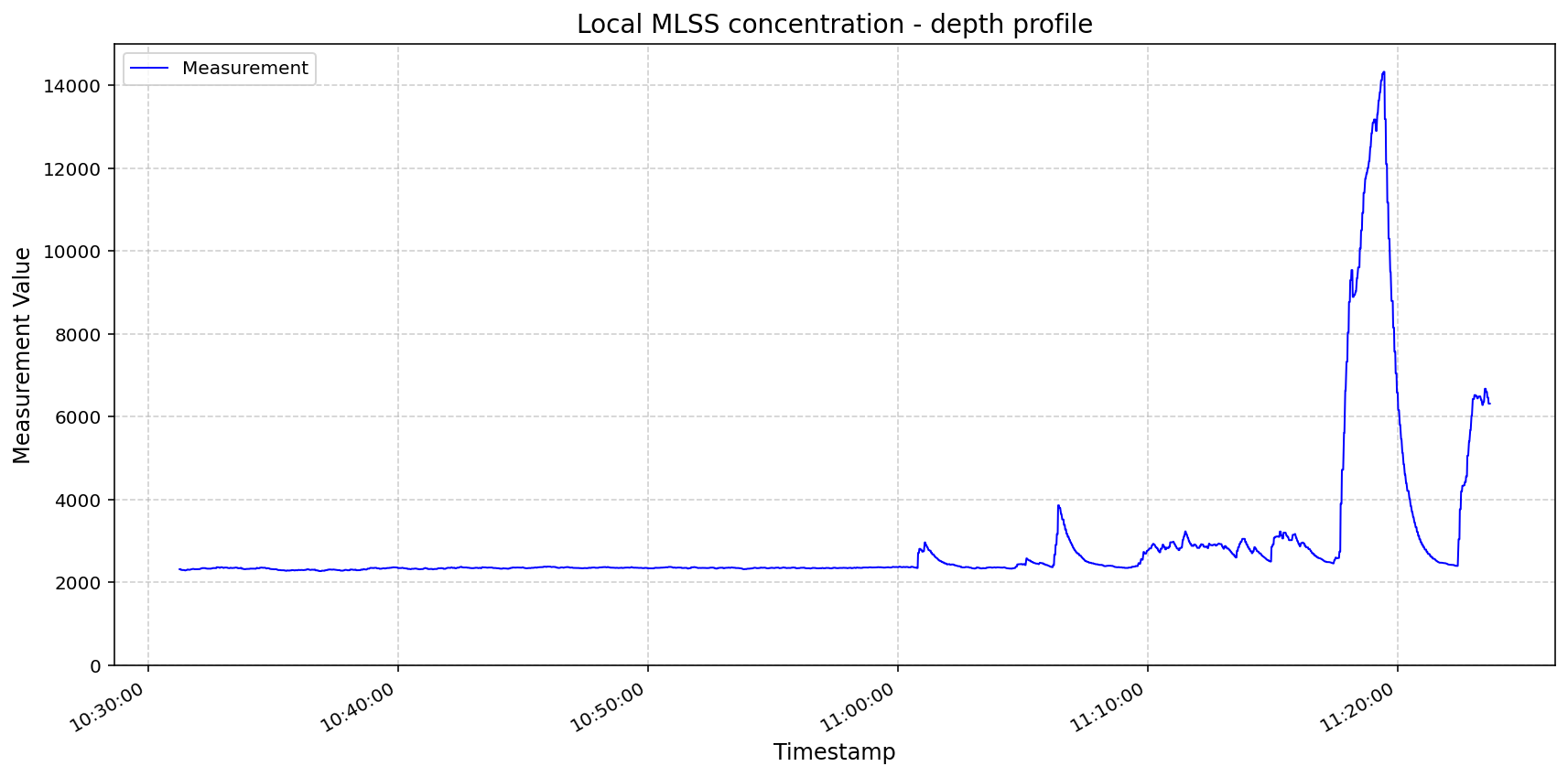
The results are pratically relevant as the Tentacle MLSS sensor can measure TSS/MLSS concentration accurately based on the factory calibration. We see that in the region of 350-400cm depth the local MLSS concentration is unstable (plume formation) and high concentration (sludge sedimentation) is observed. The reason for such elevated sludge sedimentation is expected to be pipes/tubes/structures on the pond floor obstructing the flow path of the mixers.
Aeration cycles: MLSS concentration increase
The elevated sludge sedimentation is expected to be brought into circulation during the aeration cycles. To measure this, the sensor is installed at 100cm depth - where constant MLSS was observed before- throughout the cycles.
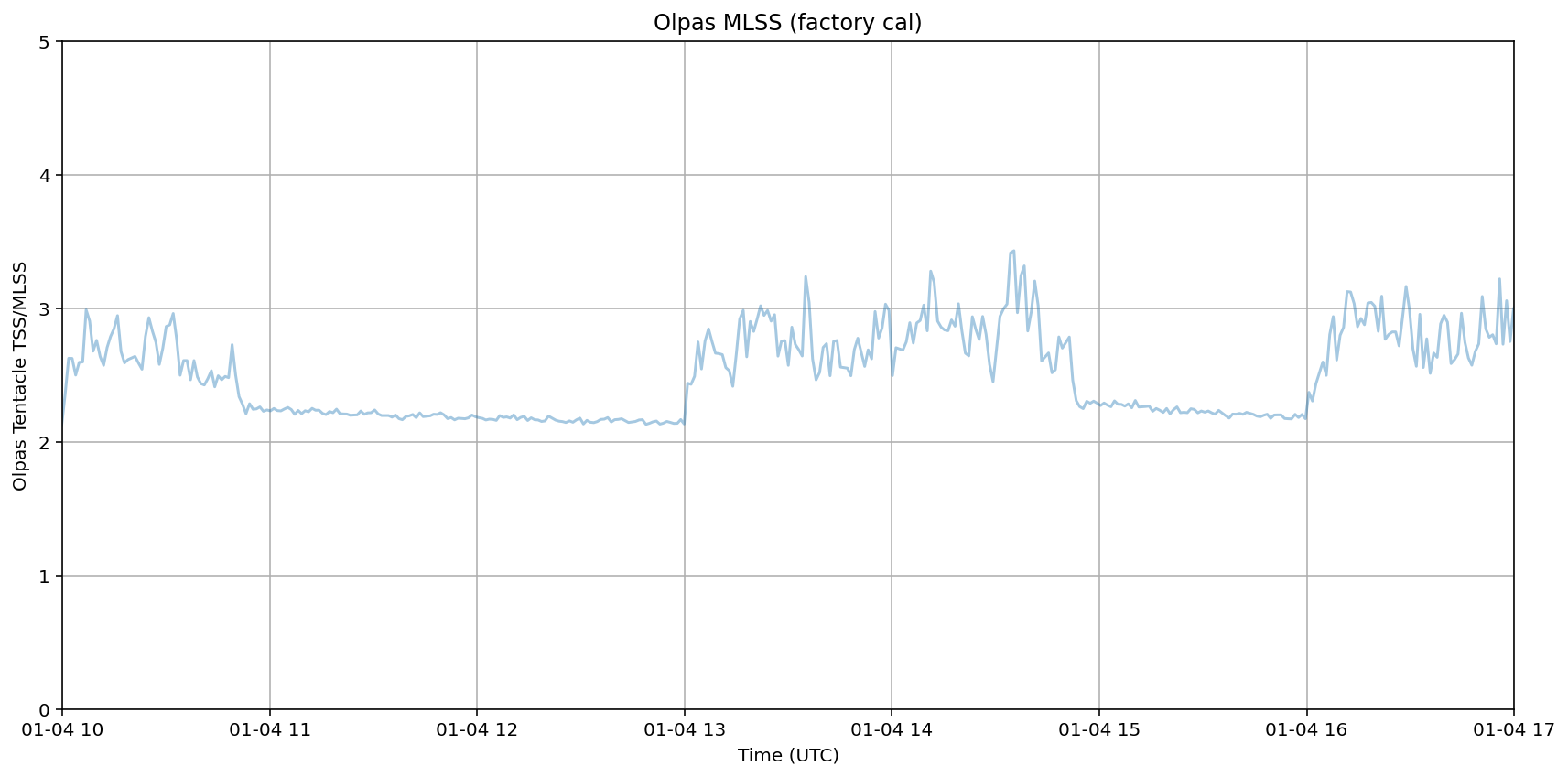
Typically, some effect of mixing is observed with/without aeration. However in this plant the sludge concentration at 100cm depth during aeration is almost 50% higher than without aeration. This is indicative of sludge sedimentation during the denitrification step.
Return of experience
This project showed the easy of use of the Olpas Tentacle sensor for quick profiling of sludge concentration in function of basin depth. The fact that it is sufficient to plug in the USB config cable and to start datalogging lowers the barrier for such quick validation studies tremendously. The issue of sludge sedimentation is quantified both in function of depth (>350cm) and during cyclic aeration. This study identified the problems at the plant which can now be solved.