
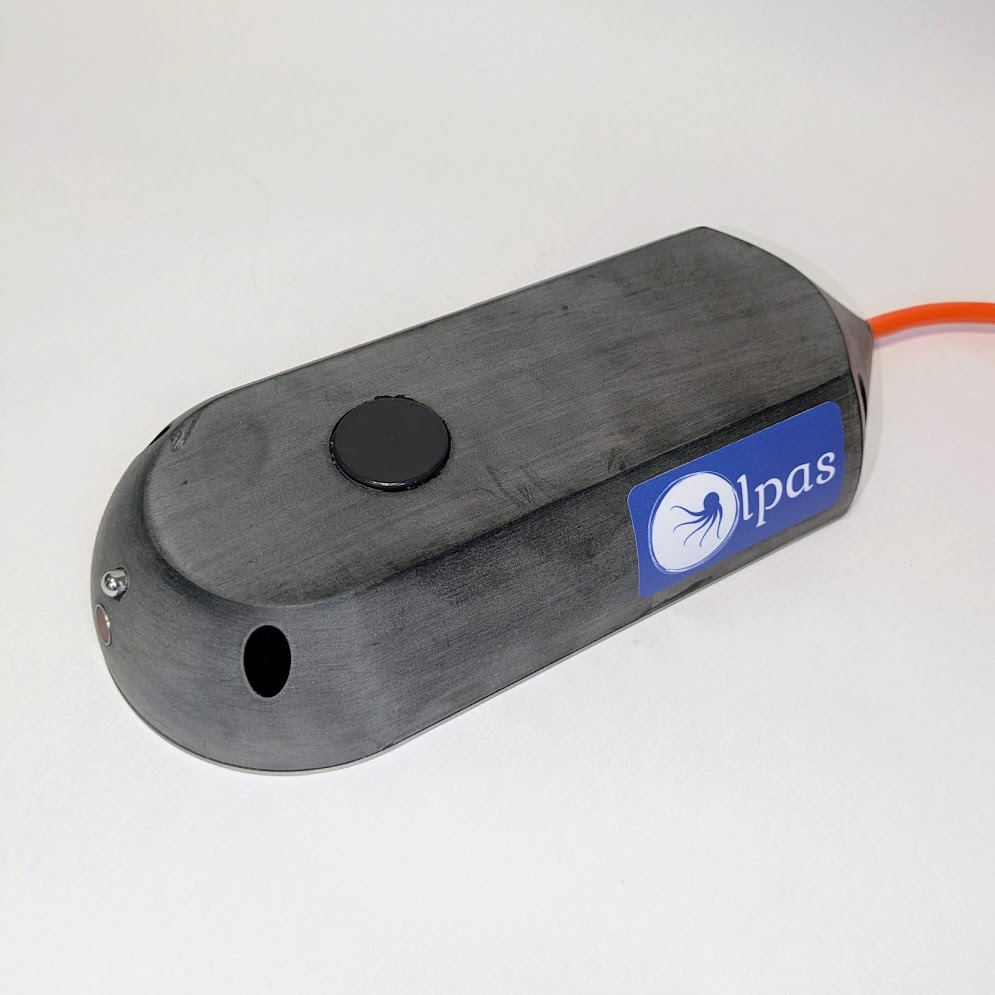
Olpas Nerite sensor
The Nerite sensor can measure suspended solids (TSS = total suspended solids or SSC = suspended sediment concentration) in water. The ultrasound transducer on the top of the sensor measures the water level above the sensor. Besides that, the sensor measures the water velocity in the axial direction of the transducer. These values combined allow to calculate the average sediment flux in shallow, confined or pipe flow.
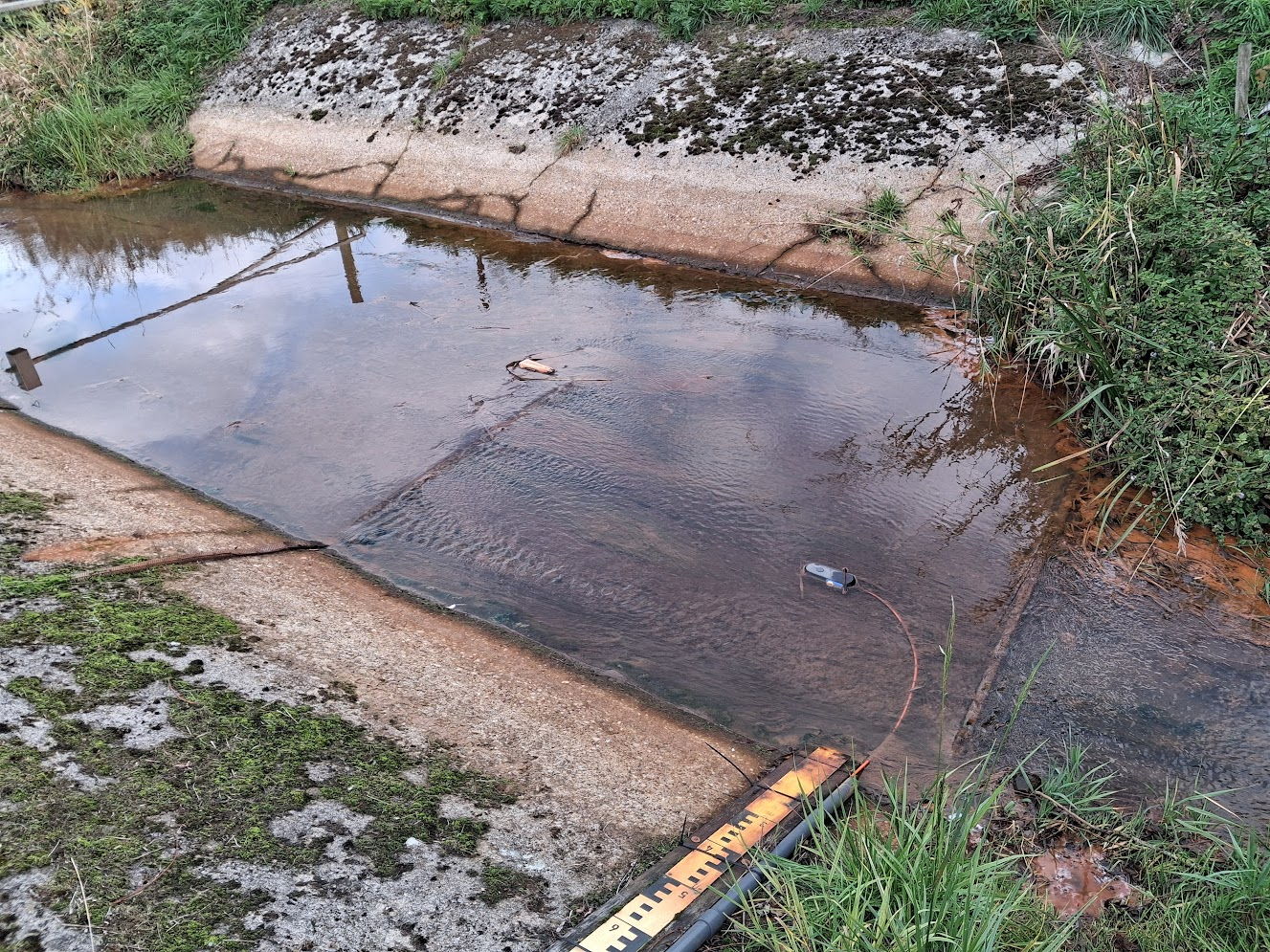
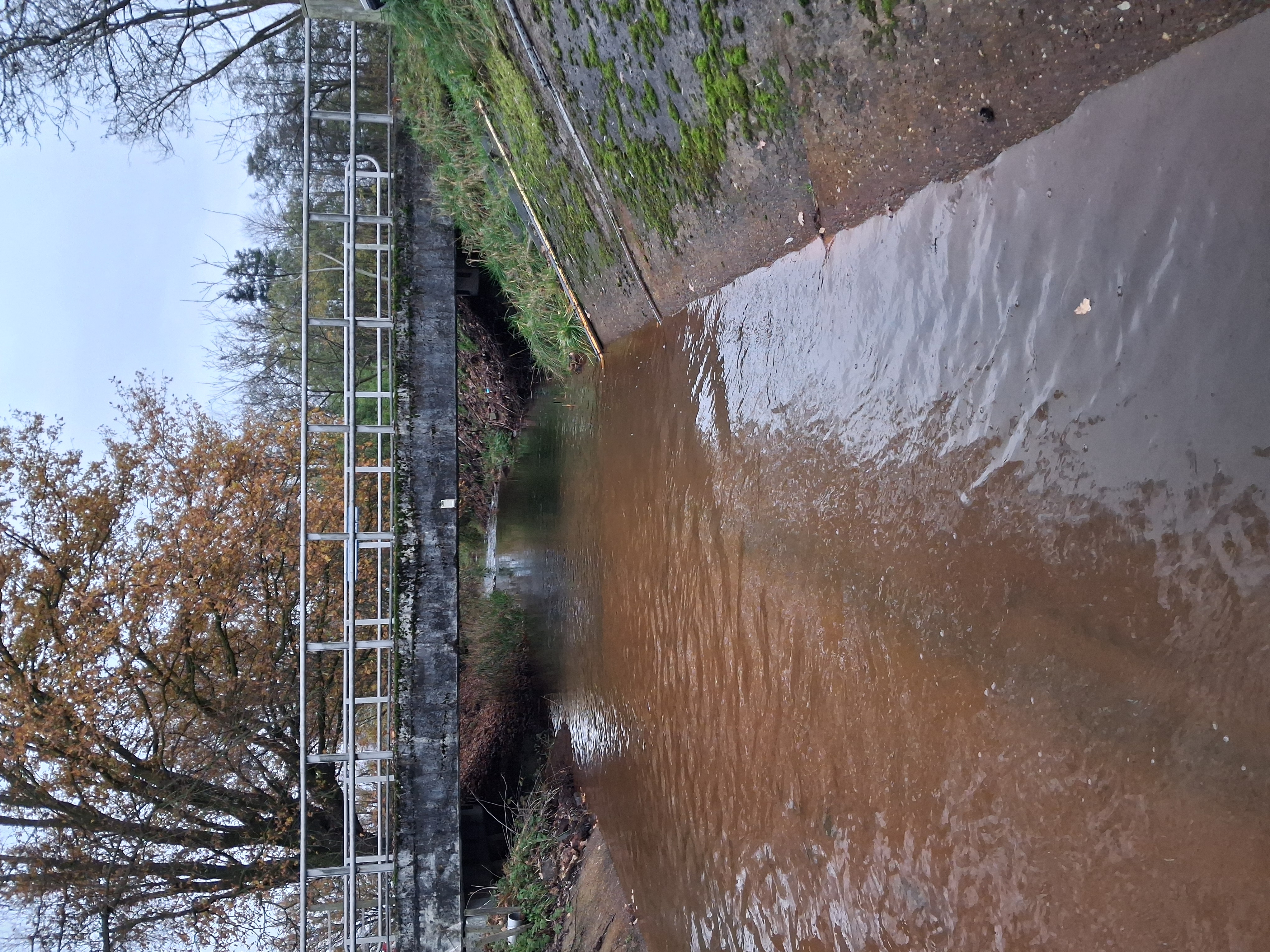
Measurement site: Kasterlee, Rode loop - Belgium
The example presented here is located in a small stream in Belgium. The sensor is mounted on the surface of a trapezium shaped concrete flow passage, allowing for accurate cross-section area calculations based on the water height.
Measurement data: TSS/SSC - Water level - Water velocity - Temperature
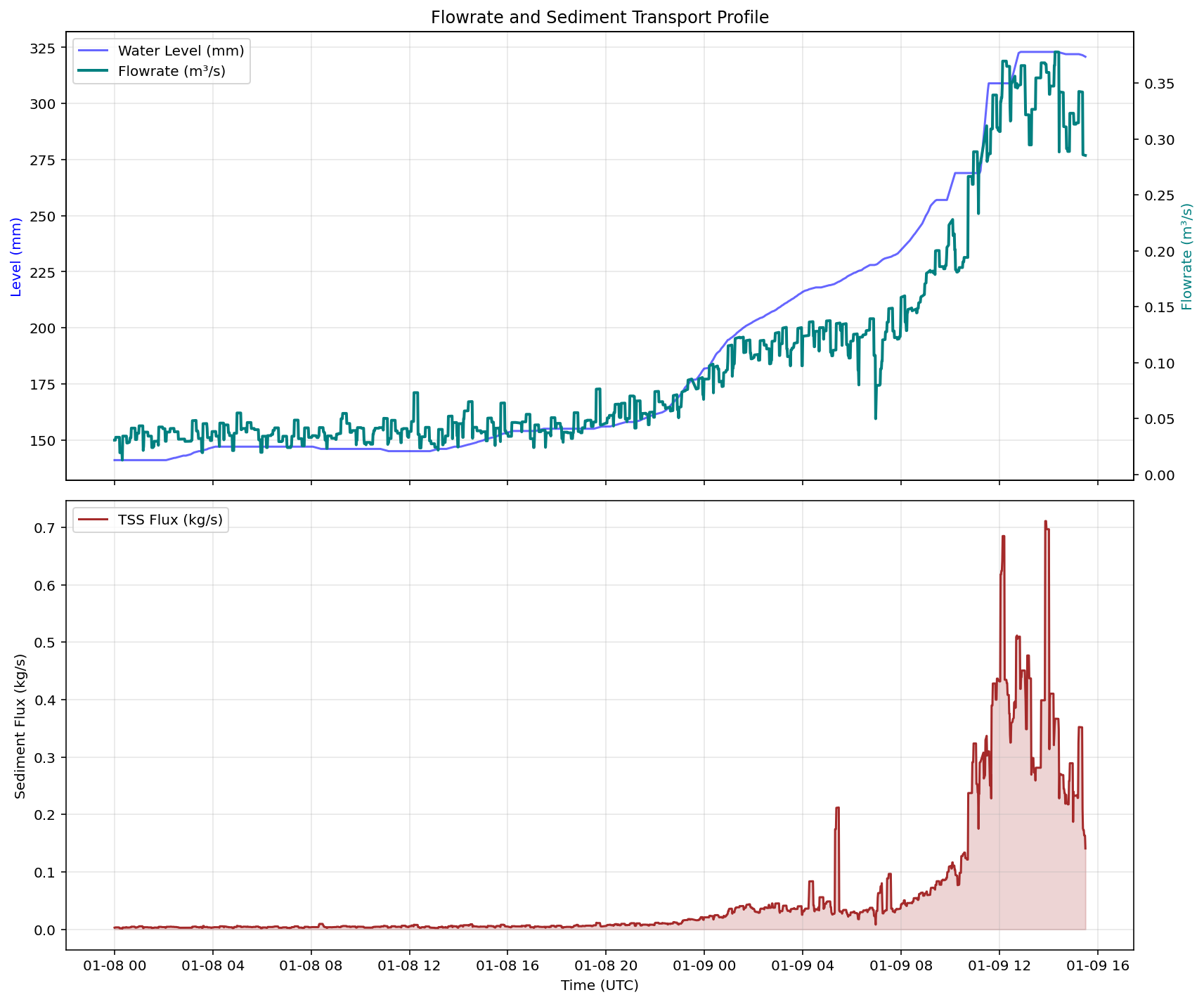
The following graph shows the measured data in the stream during an event of heavy rain combined with snow melting.
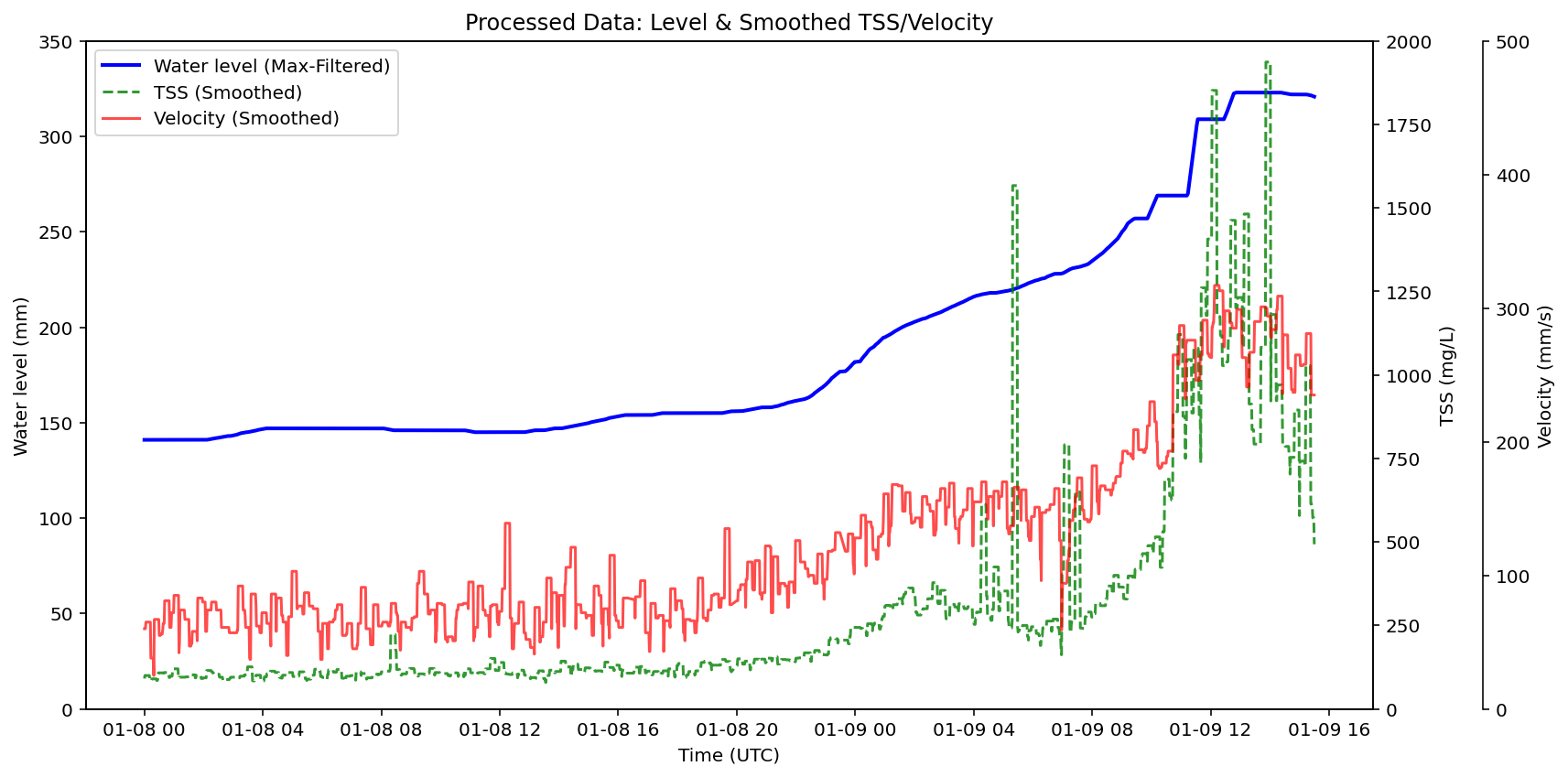
Due to the rain and snow, the water level and velocity is increasing. Typically, this increases erosion and sediment transport. The data is collected every minute to allow smoothing of the data for ease of calculation afterwards.
Calculation of sediment flux based on Nerite sensor measurements
Given the known shape of the flow channel, the flow cross-section can be calculated in function the water level:
-
y: Water level or depth (the vertical distance from the sensor top to free water surface).
-
b: Bottom width of the trapezoid, equal to the flat surface of the flow passage
-
z: Side slope (defined as the horizontal distance for every 1 unit of vertical rise, often expressed as z:1).
The area A of the water in a trapezoidal channel is given by: A=y(b+zy)
Based on this area A the flowrate is defined as: Q = A*v
The value 'v' is the measured flow velocity by the Nerite sensor (units converted from mm/s to m/s).
The suspended solids or sediment flux can be calculated by using the Nerite TSS/SSC output: TSS flux = TSS*Q
Important here is to convert TSS from mg/L to kg/m³ to keep units consistent.
The following graph shows the calculated flux. During the rain event approx. 8.5 tonnes of solids are transported in the stream.
Conclusion
Small streams or well-confined flow can be characterized with a single measurement device such as the Olpas Nerite. It allows to track water level, velocity and suspended solids which allows a full sediment flux calculation. During heavy rain events, the majority of sediment is transported in a short timeframe where the peak in suspended solids and water velocity aligns.