
Sensor connection for datalogging and configuration
First use - USB config cable
Olpas Tentacle sensors can be powered and read via modbus using the Olpas OPE-OCCA-001 configuration cable. Connect the sensor to the cable and plug the USB connector in a computer.
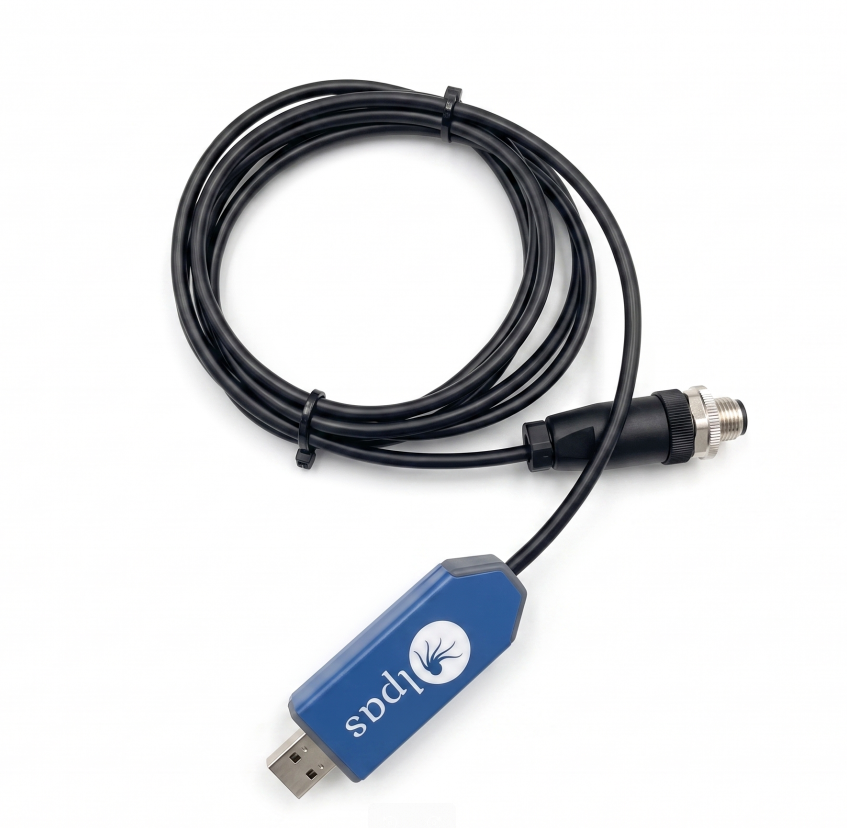
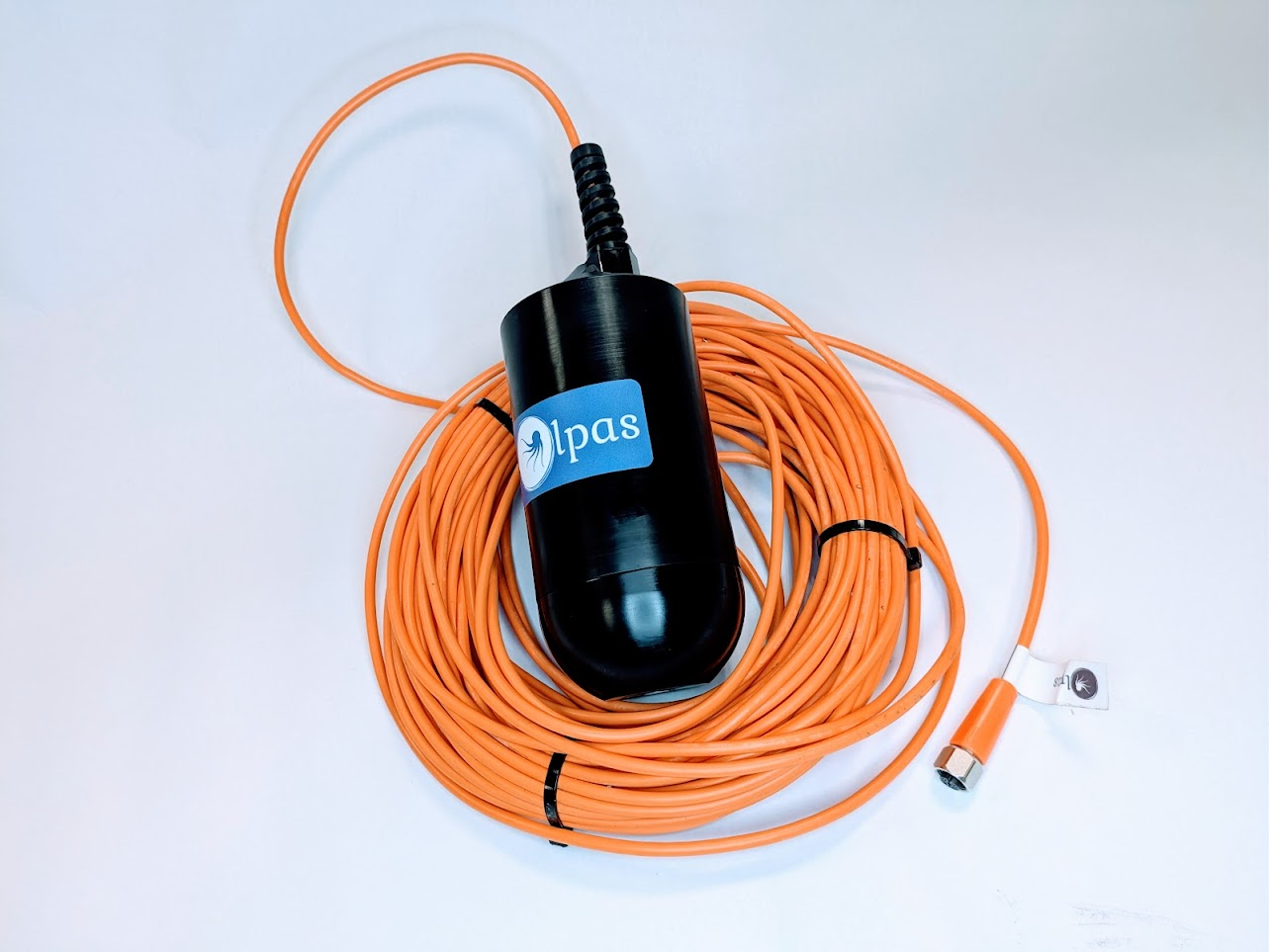
After this, open the Olpas configuration tool on Chrome or Edge browsers:
https://dashboard.olpas.tech/tentapp
The configuration tool can now be used to read sensor parameters and to check measurement values.
Typical use case - modbus connection with datalogging
Using the Olpas configuration cable, or any other modbus communication device, the measured data can also be logged.
Olpas recommends the open-source program ModbusScope, available for various operation systems:
Olpas is not involved in the development of ModbusScope.
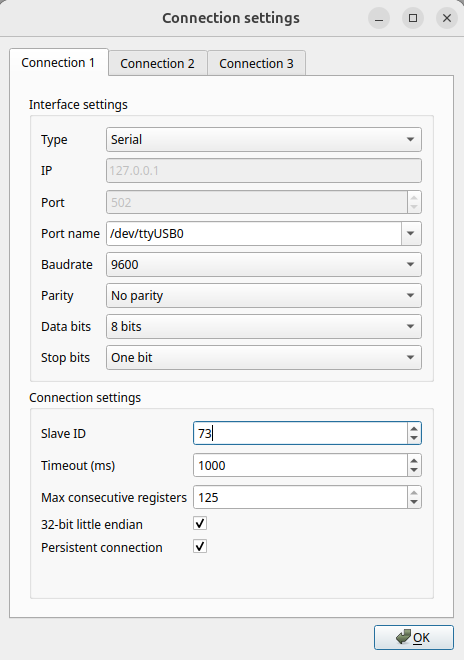
First, go to Project => Connection Settings. Use the following parameters for connection with a standard Tentacle at slave number 73:
Measuring TSS can be done by adding ‘Register settings’. For TSS, input register 0 is read from connection 1. Other measurement values, such as temperature, can be found in subsequent registers as described in the manual.
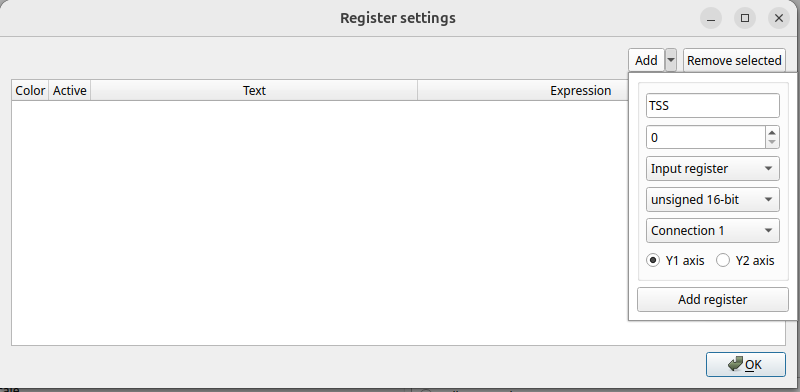
After adding the register, the measurement can be started by pushing the ‘play’ button.
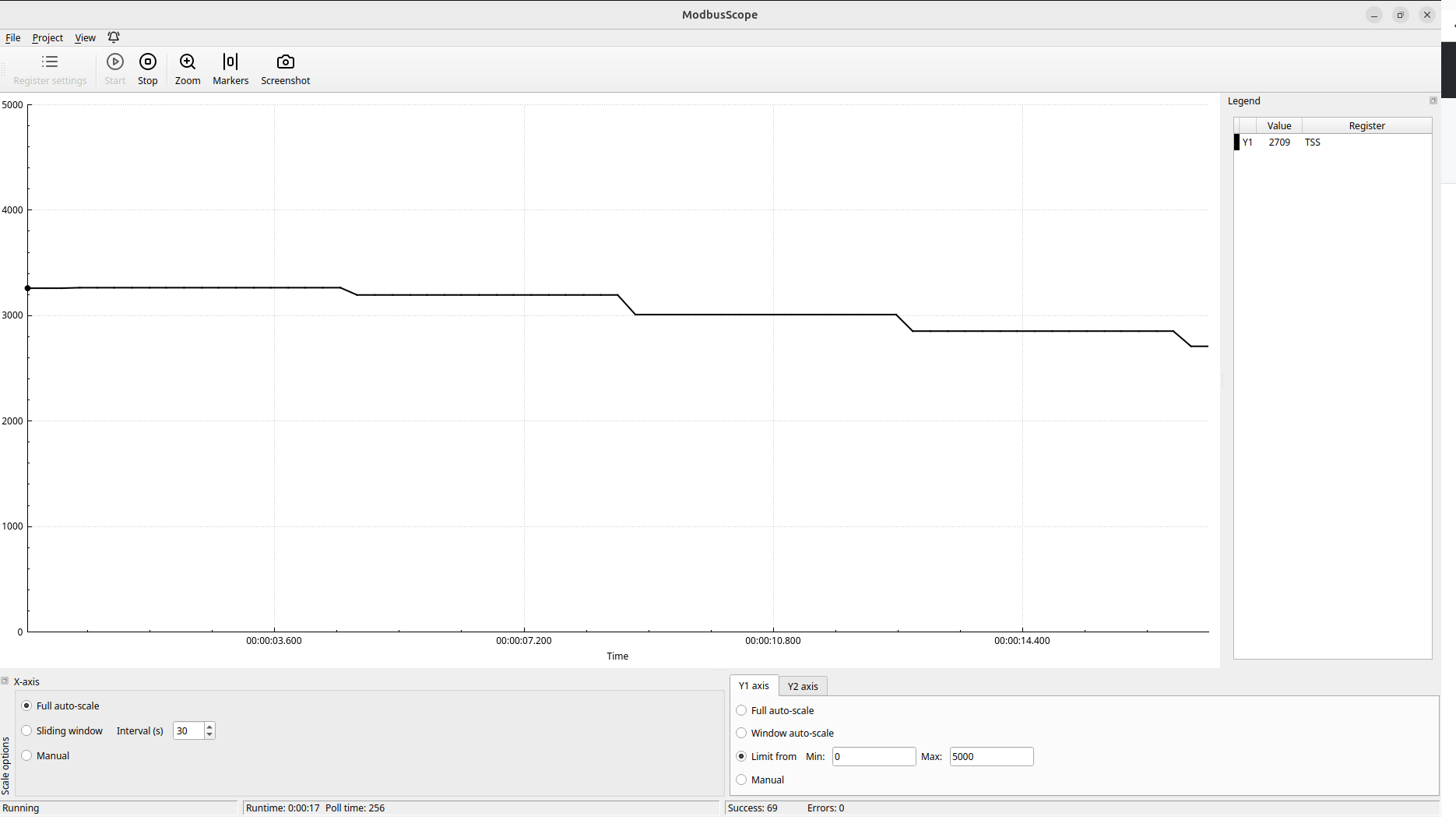
General use case - Direct modbus master connection for field measurements
Olpas Tentacle sensors are equipped with a four core wire.
The signal cable with the M12 connector can be connected as follows:
• 1 (Red): VDD: 5.5-24V
• 3 (Black): GND
• 2 (White): RS485 B
• 4 (Blue): RS485 A
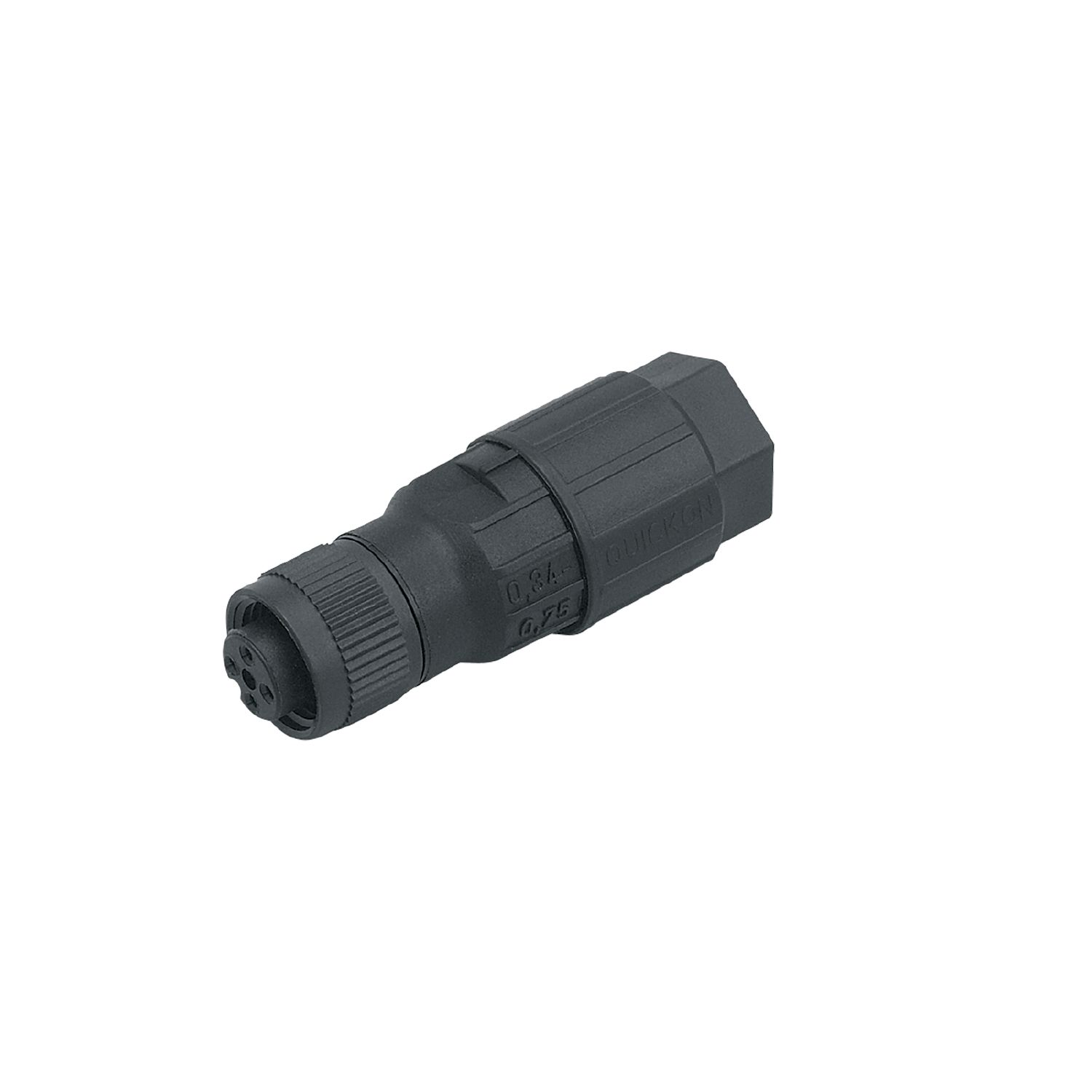
These connections are typically available using M12 connectors for a strong and weather resistant connection. However, the M12 connector can be removed to connect the cable to a terminal connector with the above mentioned color coding.
Measuring reference values as sensor performance indicator
Measurement in air
Measuring the sensor value in air is typically not a good way to confirm sensor operation. The measurement in air is typically close to zero or zero depending on the sensor type. This does not provide any information on the performance of the sensor itself.
Measurement in clean water - baseline
A well calibrated sensor will measure zero or very close to zero in clean water. However, air bubbles on the sensor surface can disturb the measurement. Make sure to leave at least 5cm of water in front of the sensor (10cm recommended).
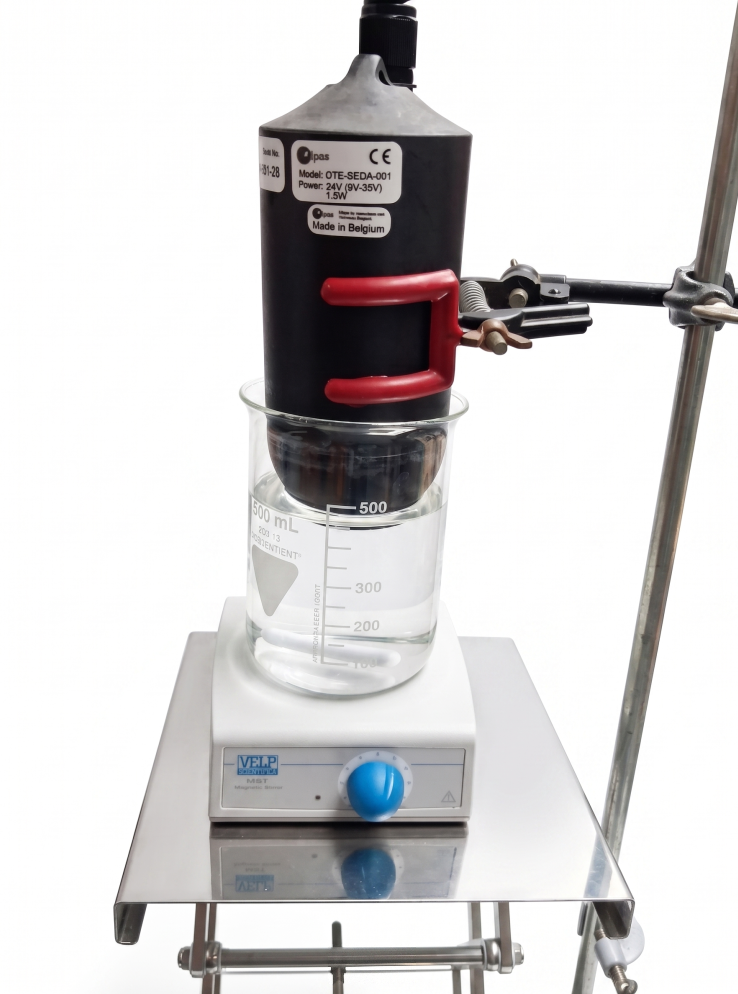
In case a sensor is not calibrated, it is recommend to use an offset of zero and the factory provided scaling factor to measure clean water. A good working sensor, even without calibration, will provide a stable reference measurement in clean water.
Measurement of a reference
Measuring a well-known reference concentration is a good indicator of sensor performance. Olpas recommends for standard TSS/SSC sensors to measure a suspension concentration of approx. 1000 mg/L. For sensors with a range of 0-100 g/L, a concentration of 10 g/L is more suitable.
Small particles (100nm - 100µm) are easier to use as they mix better. Olpas recommends inert oxide particles (such as alumina) for this purpose.
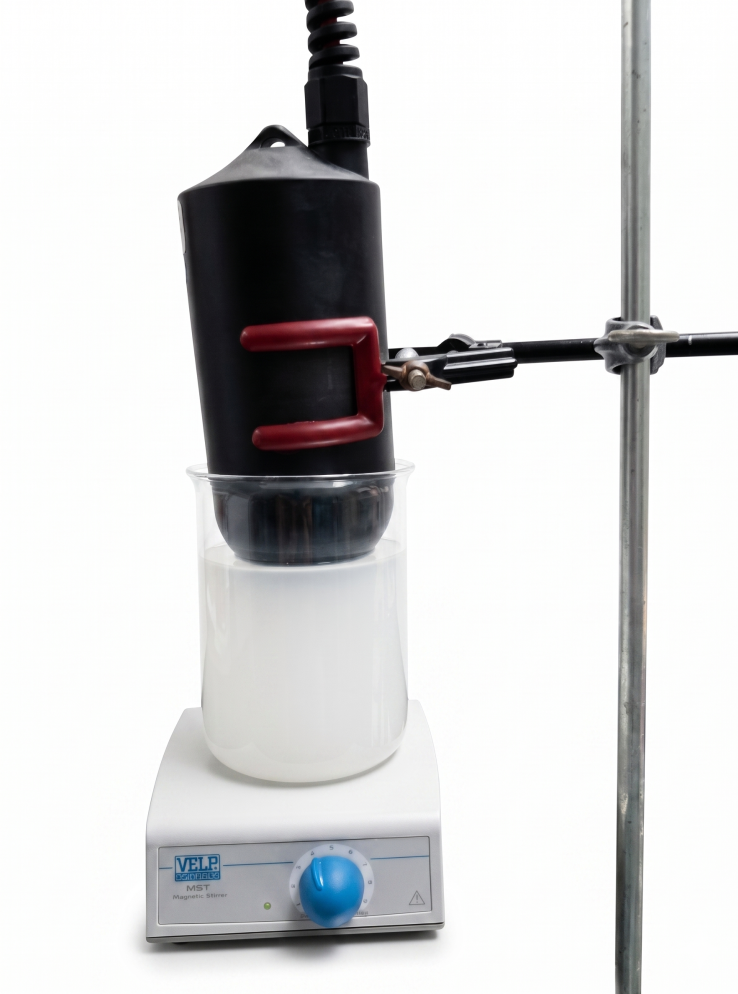
In case a sensor is not calibrated, it is recommend to use an offset of zero and the factory provided scaling factor to measure the reference. A good working sensor, even without calibration, will provide a stable reference measurement. A calibrated sensor will measure the concentration accurately in case the reference sample is well-mixed and stable.
Summary
This section described various ways of connecting and logging the data of a Tentacle sensor.
The USB config cable is an easy way to perform short-term measurements or to measure reference values.
By measuring reference values the correct operation of the instrument can be checked.