
Calibration procedure
A standard calibration procedure for the Olpas Tentacle in a laboratory environment consists of a two point calibration: baseline (zero) and a reference concentration (1000 mg/L or 10g/L, depending on sensor type).A multiple point calibration can be performed as well, where the offset and scaling factor are determined by the best-fit.
For some applications laboratory calibrations are difficult to perform or relevant reference standards do not exist. Here we describe a procedure to calibrate the Olpas Tentacle for such environments using field measurements.
Calibration with long-term data: Field installation and sample grabbing
The sensor needs to be calibrated using the offset and scaling factor. In case lab calibration is not possible, field grab samples collected over a prolonged period of time can be used.
This approach will be demonstrated with a calibration example:
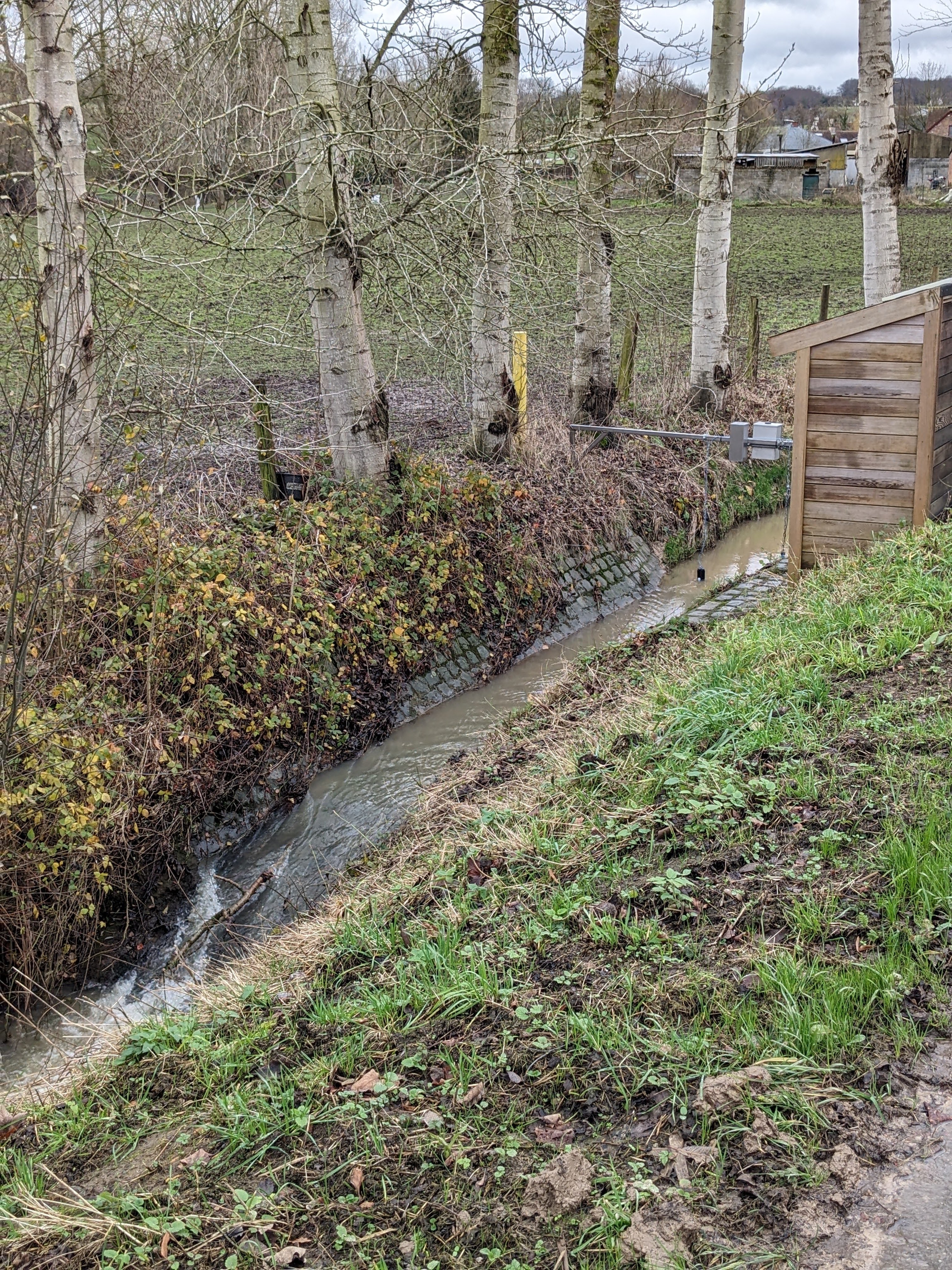
Here, the Olpas Tentacle is installed next to an automatic sampler that periodically samples the stream. After sampling, the samples are analyzed for the TSS/SSC concentration.
This gives the following results:
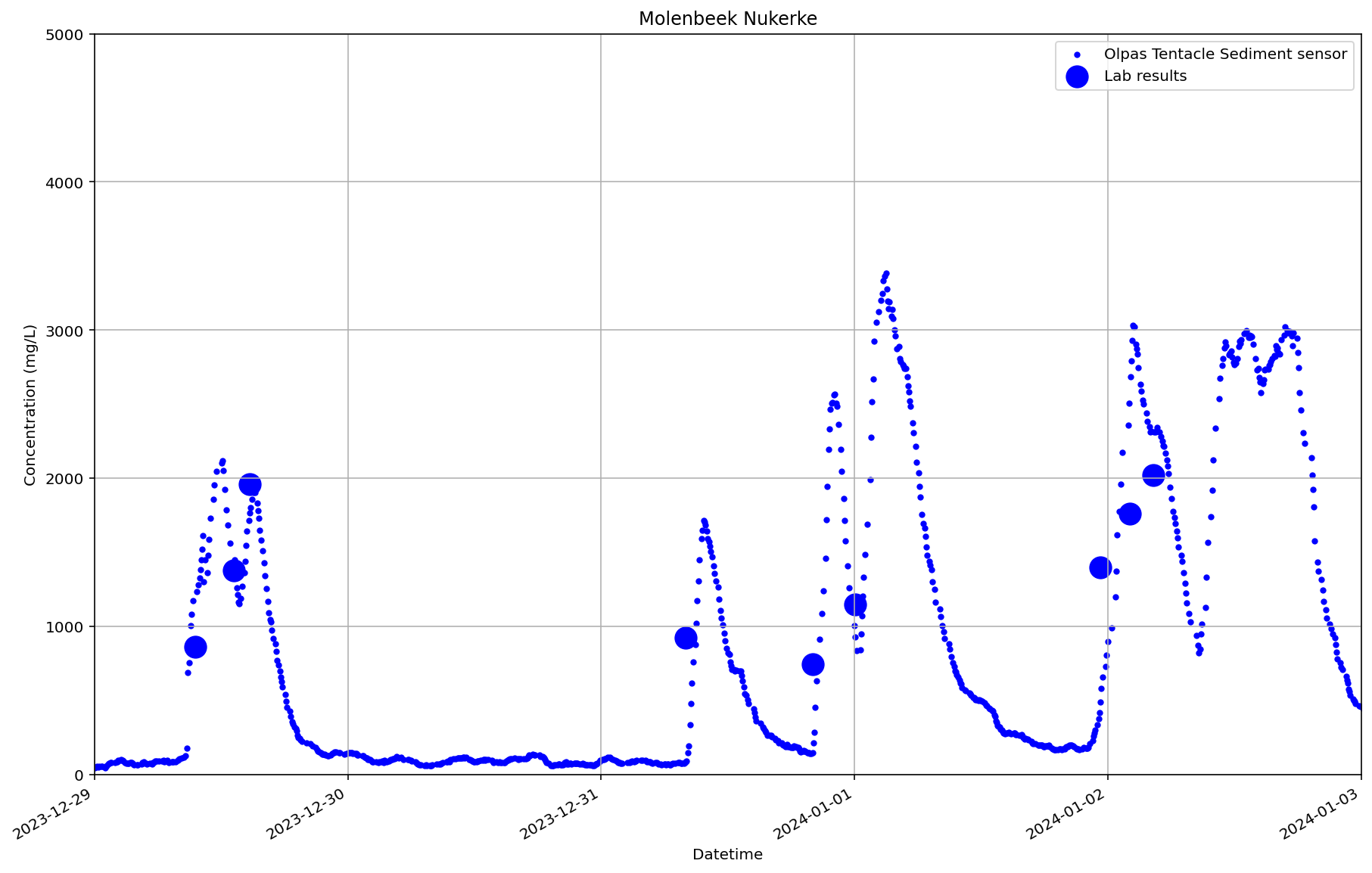
One challenge that is immediately obvious from such field measurement campaigns is that fast transients in concentration are difficult to capture with a manual or automatic sampler. Hence, it is advised to sample during constant concentration events (high or low concentrations of TSS or SSC) to make sure sampler and sensor both see the same concentration.
This effect is amplified by the battery powered field device just measuring once every ten minutes, whereas the concentration can change very quickly.
Calculating offset and scaling
Based on two or more measurement, the new offset and scaling factors can be determined.
The following plot is made from the data measured before. Here we see again that calibration data is best measured in steady-state conditions with multiple samples per points combined with extensive sensor data logging. These actions would decrease the spread in data and provide a more accurate estimation of offset and scaling.
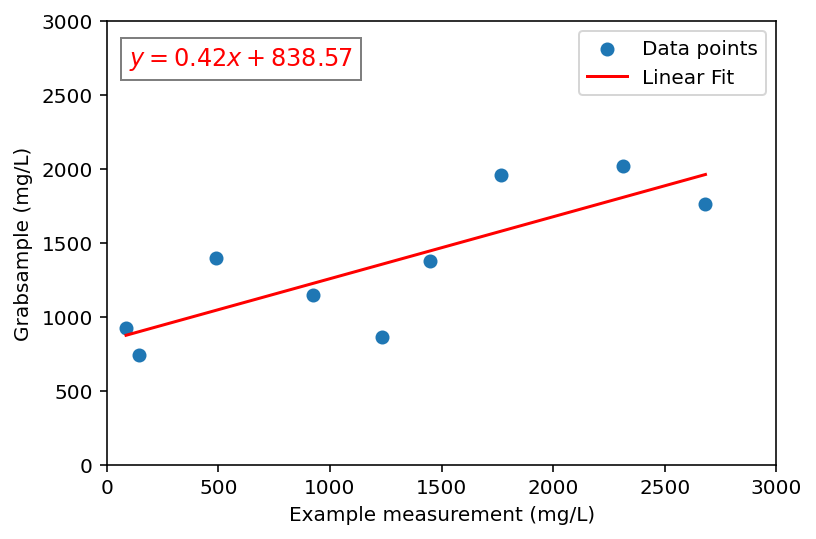
It is important to note that the obtained offset and scaling are with respect to the chosen ‘old’ offset and scaling in the sensor. When more than two calibration points are used, a spreadsheet can be used to calculate the best linear fit as shown in the image above.