
Calibration procedure
A standard calibration procedure for the Olpas Tentacle in a laboratory environment consists of a two point calibration: baseline (zero) and a reference concentration (1000 mg/L or 10g/L, depending on sensor type).
A multiple point calibration can be performed as well, where the offset and scaling factor are determined by the best-fit.
Measurement in clean water - baseline
A well calibrated sensor will measure zero or very close to zero in clean water. However, air bubbles on the sensor surface can disturb the measurement. Make sure to leave at least 5cm of water in front of the sensor (10cm recommended).
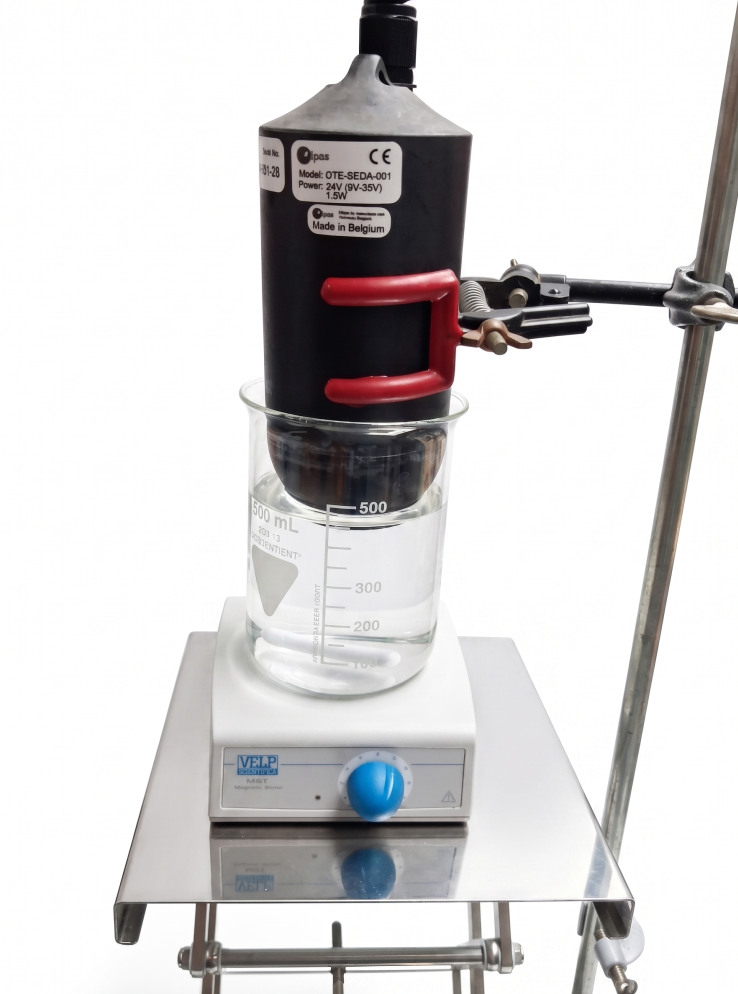
In case a sensor is not calibrated, it is recommend to use an offset of zero and the factory provided scaling factor to measure clean water. A good working sensor, even without calibration, will provide a stable reference measurement in clean water. In case the factory scaling factor is not known, the scaling factor can be increased stepwise until a measurement above 0 is obtained. Selecting a too small scaling factor will result in an inaccurate calibration.
The obtained measurement results will be used for calibration (see further).
Measurement of a reference
Measuring a well-known reference concentration is a good indicator of sensor performance. Olpas recommends for standard TSS/SSC sensors to measure a suspension concentration of approx. 1000 mg/L. For sensors with a range of 0-100 g/L, a concentration of 10 g/L is more suitable.
Small particles (100nm - 100µm) are easier to use as they mix better. Olpas recommends inert oxide particles (such as alumina) for this purpose.
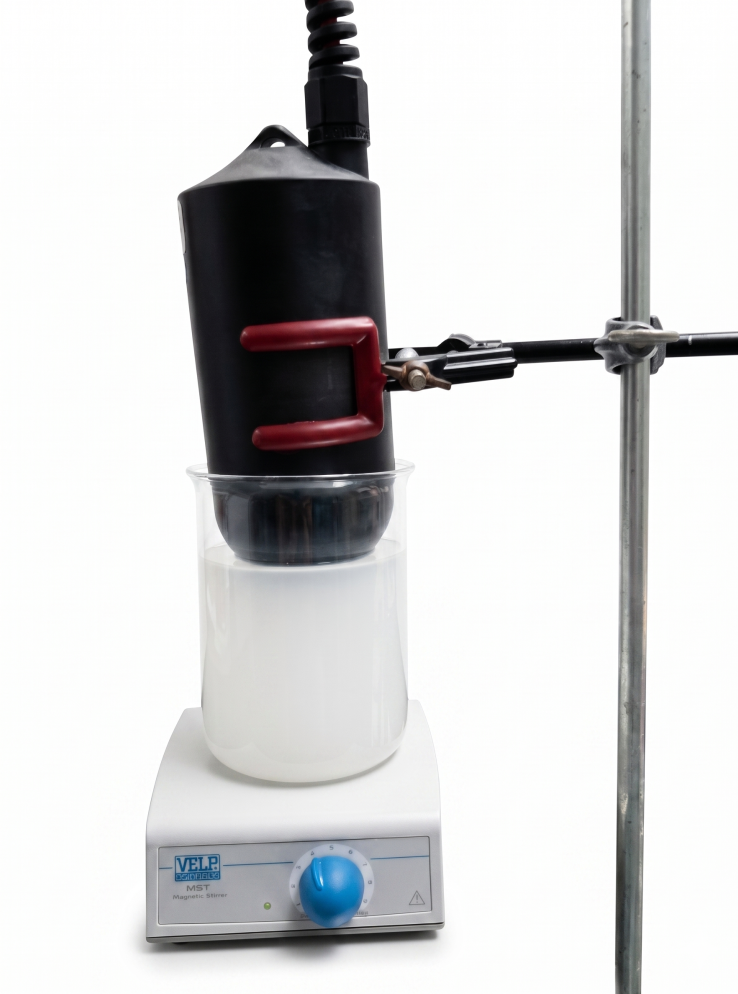
It is important that this measurement is performed with the same offset and scaling factor as the baseline measurement.
Calculating offset and scaling
Based on two or more measurement, the new offset and scaling factors can be determined.
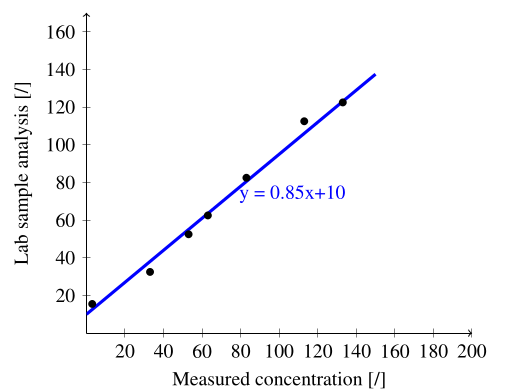
It is important to note that the obtained offset and scaling are with respect to the chosen ‘old’ offset and scaling in the sensor. This means that if the sensor used a scaling of 100 that the new scaling of 0.85 translates into 85 as the new sensor scaling factor. Furthermore, the offset of +10 translates in +8.5.
When more than two reference are used, a spreadsheet can be used to calculate the best linear fit as shown in the image above.